Seventeenth Avenue Northeast pulls a permit every year. Eighteenth Avenue, one block over, usually doesn't bother. That small bureaucratic difference is the whole story of how a couple of blocks between Locust Street and Beach Drive became the largest single-night pedestrian event most people in St. Petersburg have never seen listed on a city calendar.
If you already live in Historic Old Northeast, you know the outline: October arrives, front yards turn into movie sets, and by Halloween night your street either is the destination or is fifty yards from it. What most residents haven't pieced together is how much the event has grown, how it's actually run, and why one street handles the crowd differently than its neighbor.
The Permit Only One Street Bothers to Get
Every year, residents along 17th Avenue Northeast sign off on a permit that shuts their block down to vehicle traffic for the evening, historically running until 9 p.m. They hire two off-duty police officers out of their own pockets to manage the closure and keep outside traffic away once the crowds arrive. That's a resident-funded operation, block by block, not a city-run festival.
Eighteenth Avenue tells a different story. Residents there field a rival collection of elaborate displays, homes like the McCaffrees' nautical build with its giant sea creature tentacles and the Arringtons' War of the Worlds alien invasion between Locust and Cherry, but they typically skip the formal street closure paperwork. The crowd doesn't care about the paperwork gap. It spills over anyway, and the Historic Old Northeast Neighborhood Association has stepped in to fund additional off-duty officers, at one point adding four extra to patrol the wider area from around 7:15 to 10:15 p.m., covering ground the 17th Avenue permit never claimed to protect.
That asymmetry, one street with an official closure and a hired detail, one street riding the overflow, is worth knowing if you're new to either block. It shapes everything from where you can park to which end of the neighborhood the noise settles on first.
The Footprint Has Grown, Not Just the Crowd
Older accounts of the event describe a tight, single-block closure. A 2011 write-up placed the action specifically on the stretch of 17th Avenue between Locust and Poplar. Descriptions from the past few years stretch the boundaries further, placing the peak activity across both 17th and 18th Avenues Northeast, running from Locust Street all the way to Beach Drive. The geographic footprint of the tradition has widened by a couple of blocks over roughly a decade, not just the guest list.
The attendance numbers back that up. A 2014 estimate from a longtime resident put the crowd at around 2,000 trick-or-treaters. By 2016, neighbors were telling Fox 13 the count had climbed to about 3,500. By Halloween 2025, the Tampa Bay Times reported the neighborhood was preparing for more than 4,000 trick-or-treaters in a single night. That's roughly double the estimated turnout in about a decade, in a residential neighborhood with no admission gate, no city permit covering the whole event, and no formal headcount beyond what the people buying the candy can tell you.
One of those people is Vince Shook, who has decorated his home with skeletons and lights since moving in about 35 years ago. He told Fox 13 that his candy budget keeps climbing along with the crowd: "usually it goes up 100 or 200 a year." That's not a marketing estimate. That's a homeowner tracking his own bag count against a trend he's lived through longer than most residents have owned their houses.
Where the Tradition Actually Started
The scale is recent. The habit isn't. Longtime residents trace the current form of the event back to Cynthia Serra on 10th Avenue, who, more than two decades ago, started dressing up with a friend as the Wicked Witches of Old Northeast and parading the neighborhood in a convertible tossing candy. That informal ritual grew into a house-decorating contest that the Historic Old Northeast Neighborhood Association now runs as its official annual competition, with categories that have covered everything from Beetlejuice to Jurassic Park to Monsters, Inc.
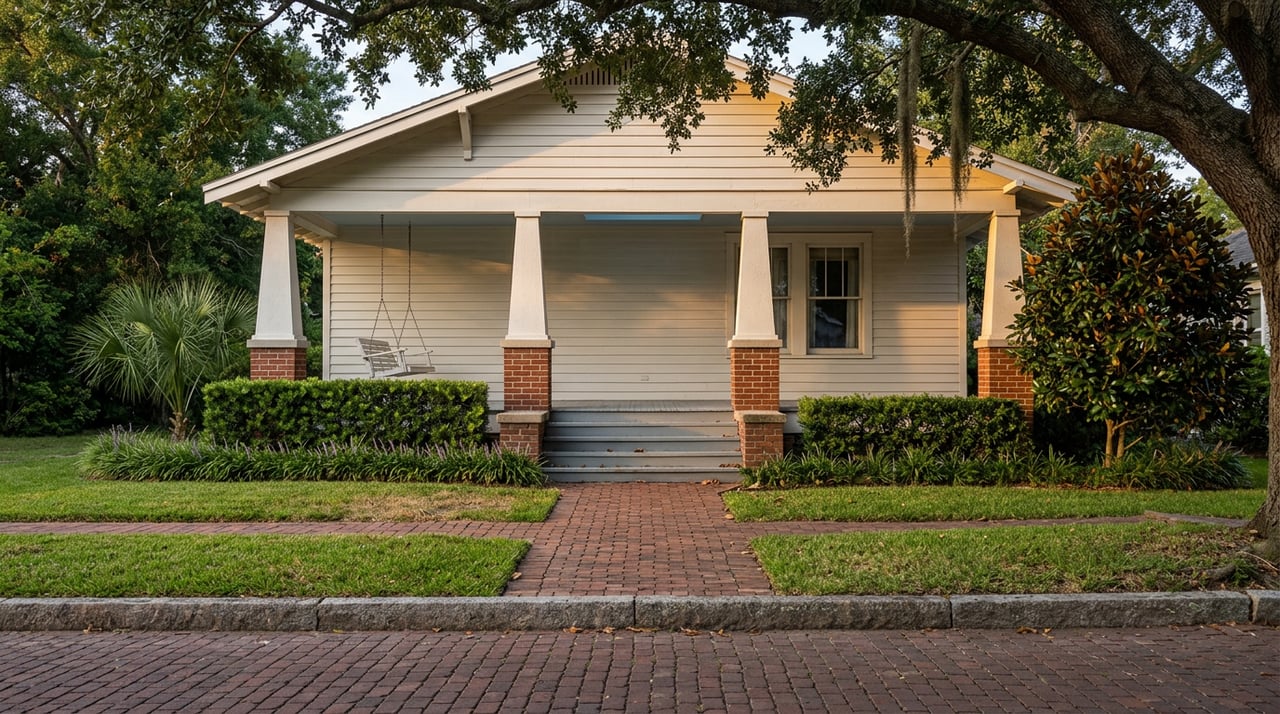
The neighborhood's building stock does some of the work for free. Craftsman bungalows and Mediterranean Revival homes, set back on brick streets under a mature canopy of live oaks, give a haunted display more depth and shadow than a flat suburban front lawn ever could. A graveyard scene reads differently under a hundred-year-old oak than it does under a streetlamp on a cul-de-sac.
New residents don't always grasp what they've bought into. David McCaffree, who purchased a home on 18th Avenue with his wife Elizabeth, later said a real estate agent had mentioned the neighborhood was "really active at Halloween" but that they had no sense of the scale of the displays or the number of people who would show up until they lived through it themselves. Their first Halloween ended up canceled by pandemic restrictions, but an old newspaper photo of their own house circulating in a Tampa Bay Times piece about that subdued year convinced them there was no going back to a quiet October.
The Quiet Hour Before the Chaos
Not every household wants to compete with 4,000 strangers on their sidewalk after dark. An informal earlier window, cemented during the pandemic when parents organized a safer, smaller trick-or-treating slot for younger kids, has stuck around for families who find the peak hours overwhelming or who simply have other plans that night. It's not an official HONNA program. It's a workaround that residents built for themselves and kept because it worked, and it's worth knowing about if your household includes toddlers who don't need to be in the middle of a crowd built for teenagers.
What Residents Actually Prepare For
Ask anyone on the core blocks what Halloween prep looks like and you get a level of logistics that has nothing to do with pumpkin carving.
- Candy in bulk. Shook's escalating count, adding one to two hundred pieces every year, is typical rather than exceptional on the busiest blocks.
- Yard protection. Neighborhood veterans warn newcomers that when a thousand kids show up in one night, keeping them on the sidewalk and off the sod and sprinkler heads takes real planning, not just good decorations.
- Extra hands. Some homeowners hire help just to keep the candy line moving. Gates has brought in art students in past years specifically to manage the crowd at his door.
- A tolerance for the late-night edge. Gates has also been candid that as the evening wears on, older teenagers show up alongside younger trick-or-treaters, and that the crowd occasionally needs the off-duty officers to do more than direct traffic. His own read on it, after years of hosting: the overall behavior has held up better than he expected.
There's also a piece of neighborhood folklore worth passing along for what it says about how seriously some residents take the tradition. One house reportedly ran a cotton candy machine for trick-or-treaters, drawing a line that stretched for a block. Neighborhood legend holds that when the house eventually sold, the machine stayed behind, on the understanding that whoever moved in would keep the tradition running.
Not every family that ends up on these blocks signed up for a decorating arms race. But the ones who do, like the Wolski family, who told Fox 13 they started building their Beetlejuice display back in August, treat it as a genuine hobby, one that also happens to draw visitors from well outside city limits. Fox 13 spoke with one family who had traveled from Belgium for a second consecutive year specifically to walk the neighborhood on Halloween night.
The Part That Doesn't Show Up in the Photos
Most coverage of Old Northeast's Halloween season is a photo gallery: skeletons, spiderwebs, a Jurassic Park front yard. What that coverage skips is the operational reality underneath it, the permit one street pulls and the other doesn't, the crowd that has roughly doubled in a decade, and the boundary of the event physically creeping outward from a single block near Locust and Poplar to a stretch that now reaches Beach Drive. If you live on or near 17th and 18th Avenues Northeast, that's not trivia. It's the actual shape of your October, and it's worth knowing before the candy budget catches you by surprise.
If you're already part of this neighborhood's rhythm, or you're curious what else makes Historic Old Northeast tick beyond one very loud night in October, Kym Coyle has spent years getting to know these blocks street by street, tradition by tradition. Reach out anytime you want a real conversation about life here, no permit required.
